

Witkoff’s Peace Plan, Ukraine, and the Future of the Free World
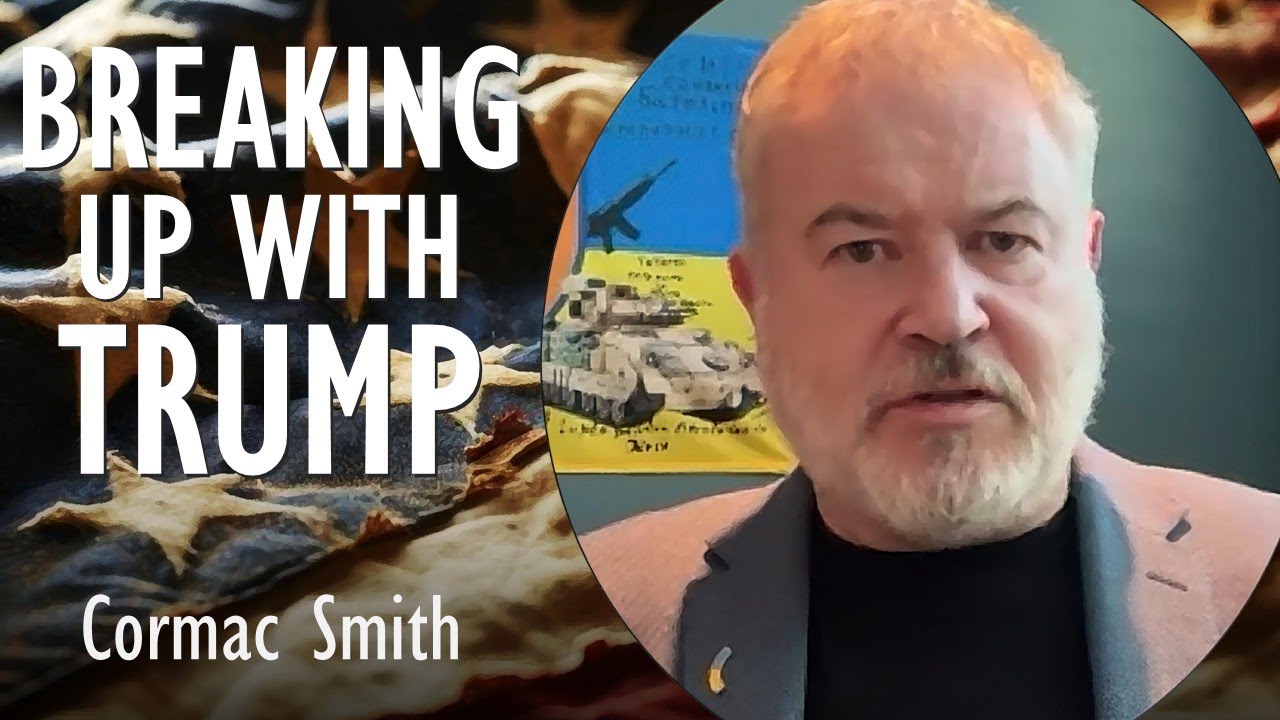
This article summarises a wide-ranging discussion between Jonathan and communications strategist Cormac Smith about the new 28-point “peace plan” pushed by the Trump White House, its impact on Ukraine, and the wider consequences for Europe and the democratic world.
The New “Peace Plan” as Coercion, Not Peace
The conversation opens with a blunt premise: the latest US-led “peace plan” is not a balanced proposal, but a coercive attempt by the Trump White House to push Ukraine into capitulation. It is framed as:
- A deal heavily skewed in Russia’s favour.
- A product of desperation and urgency in Washington.
- A vehicle through which Trump and those around him could personally and politically profit.
The core fear is that this is not diplomacy in good faith, but an effort to force Ukraine to accept the effective dismantling of its sovereignty under the banner of “peace”.
Is This the Break with the United States?
A central question is whether this marks a historic break between the US and its democratic allies. Smith argues that:
- The US under Trump can no longer be relied on as the leader of the free world.
- Democracies in Europe, Canada, Japan, South Korea, Australia, and New Zealand must be prepared to act without US leadership.
- This is not just about Ukraine’s survival; it is about the security and values of the wider democratic world.
According to Smith, this is the moment Europe and its partners must move beyond “fine words” and symbolic solidarity towards concrete, independent action.
Trump, Autocrats, and Corruption
The discussion strongly challenges the idea that Trump is merely “under pressure” or subject to kompromat. Instead, it presents a much starker view:
- Trump is described as personally enthralled by strongmen and dictators, especially Vladimir Putin.
- His behaviour is framed not as an aberration but as consistent with an admiration for authoritarian power and personal enrichment.
- Smith characterises Trump as the most corrupt and venal US president in history, caring primarily for his own wealth and status rather than for the interests of the United States or its allies.
From this perspective, the “peace plan” is not a naïve mistake; it fits a broader pattern of alignment with authoritarian interests at the expense of Ukraine and the rules-based order.
Why the Plan Is Existential for Ukraine and Europe
Smith and Jonathan argue that the plan amounts to a capitulation which would have three grave consequences:
- The end of Ukraine as a sovereign, democratic state, given the scale of Russian territorial demands and stated intentions.
- The collapse of the post-1945 rules-based order, whose core principle is that large states cannot simply invade and absorb weaker neighbours.
- Acceleration of nuclear proliferation, as small and medium states conclude that nuclear weapons are the only reliable protection against aggressive neighbours.
Taken together, these outcomes would bring the world closer to a Third World War, not further from it.
Zelensky’s Churchillian Choice
The conversation frequently invokes Winston Churchill and Neville Chamberlain as historical archetypes. Zelensky’s current dilemma is framed in these terms:
- Churchill: a leader who chooses to resist aggression even at immense cost, believing that “nations that go down fighting rise again”.
- Chamberlain: a leader who seeks accommodation with an aggressor and secures only temporary respite and greater danger later.
Zelensky is portrayed as facing a brutal choice between:
- Continuing to fight with limited supplies and mounting casualties, but preserving Ukraine’s existence and dignity.
- Accepting a deal that trades territory and sovereignty for temporary relief, at the risk of Ukraine’s destruction over time.
Smith’s expectation and hope is that Zelensky will “reach for his inner Churchill”, but he stresses that the real anchor of resistance is the Ukrainian people themselves, whose will and resilience remain extraordinarily strong.
Genocide, Mariupol, and Historical Context
A large part of the conversation focuses on the scale and nature of Russian violence in Ukraine, arguing that it meets the criteria of genocide:
- In Mariupol alone, conservative estimates put civilian deaths at 25,000 in seven weeks, with some estimates as high as 100,000.
- Russia’s actions are said to meet all five tests of the UN Genocide Convention, with clear intent expressed by Russian leaders to deny Ukraine’s existence as a nation.
- The phrase “Ukraine without Ukrainians” is cited as a shorthand for Moscow’s aims.
This is set in a deeper historical frame: the Holodomor famine of 1932–33, Stalin’s purges, and the catastrophic losses Ukraine suffered in the Second World War. The argument is that Ukrainians’ current resilience is rooted in a century of extreme suffering under both Nazi and Soviet rule.
Western Failures, Frozen Assets, and What Must Be Done
The speakers are highly critical of Western policy since 2014, and even more so since 2022:
- Western states, especially the US under Biden, are accused of giving Ukraine “half” of what it needs, “slowly”, and with restrictions on use.
- This caution is seen as driven by fear of Russian escalation and of the possible breakup of the Russian Federation, rather than by strategic clarity.
- European leaders are described as “supine” and overly deferential to internal veto players such as Hungary’s Viktor Orbán and Slovakia’s Robert Fico.
Three concrete tests are proposed for European resolve:
- Unlock €140 billion in frozen Russian state assets and use them to support Ukraine, ideally “before Christmas”.
- Invoke Article 7 of the EU treaties to suspend voting rights of member states that systematically obstruct common policy, notably Hungary and Slovakia.
- Provide long-range capabilities like the German Taurus missile, complementing existing systems (Storm Shadow, SCALP) to intensify pressure on Russia’s energy infrastructure.
These moves are presented as necessary steps to compensate for US unreliability and to show that Europe can act as a strategic actor in its own right.
Russia as an Imperial Problem, Not Just a Putin Problem
A recurring theme is that the problem is not just Putin but the nature of the Russian state itself:
- Russia is described as an imperial entity that has never developed a stable tradition of liberal democracy.
- There is an expectation among many Ukrainians (and some Western analysts) that the Russian Federation will eventually fracture.
- The West cannot prevent that breakup, but it can prepare for it and seek to limit the collateral damage.
The argument is that as long as Russia remains an imperial project, there will not be lasting peace or security in Europe, regardless of who sits in the Kremlin.
Corruption and Reform: Ukraine and the West
The discussion acknowledges persistent corruption in Ukraine but insists on context and comparison:
- Between 2014 and 2016, Ukraine made more progress on reform and anti-corruption than in all the years since independence in 1991.
- Reforms like the Prozorro e-procurement system and police reforms are cited as concrete achievements.
- The EU’s decision to move Ukraine forward on its accession path is presented as proof that meaningful reforms are recognised.
At the same time, Western countries are criticised for holding Ukraine to higher standards than they apply to themselves, despite their own corruption scandals and systemic failures. Russia, by contrast, is described as “infinitely more corrupt” but shielded from scrutiny by repression rather than transparency.
The Resilience of Ukrainians and Why Ukraine Matters
Beyond geopolitics, the conversation highlights the human side:
- Nearly every Ukrainian has lost someone in the war or knows someone who has been killed, tortured, or displaced.
- Despite exhaustion, fear, and grief, there is little sign of willingness to surrender or accept a dictated peace.
- Personal stories from Kyiv and Mariupol illustrate both the trauma and the extraordinary resilience of Ukrainian society.
For Smith, Ukraine is not just “another conflict zone” but a country that has profoundly affected those who have lived and worked there. Ukraine’s struggle is framed as:
- A fight for its own survival.
- A defence of the European security order.
- A test of whether democracies are willing to defend their values in practice.
Conclusion: “Money and Guns Today – or Daughters and Sons Tomorrow”
The discussion ends on a stark message. If Ukraine is abandoned or forced into capitulation by its supposed allies:
- Ukraine may cease to exist as an independent state.
- The rules-based order may be fatally undermined.
- Nuclear proliferation and great-power conflict may become much more likely.
The choice for Western democracies is presented in simple, brutal terms:
Either provide money and weapons now, while Ukrainians are willing to fight for their own freedom – or be prepared to send our own sons and daughters later.
Whether that warning is heeded, the speakers argue, will determine not only Ukraine’s future but the character and security of the democratic world for decades to come.
